
How a 1975 California Law Put Toxic Chemicals in Every American Home

I didn’t go looking for a problem. I went looking for a tag.
After weeks of researching flame retardants for content I was developing for Fasting in Paradise, I realized I had never actually checked my own couch. We purchased it from Restoration Hardware in 2019, chosen purely for its design aesthetic. The toxicity of a couch hadn’t entered my mind. It’s not the kind of thing most of us think about when we’re choosing furniture. We think about how it looks, how it feels, and whether it fits the room. I was no different.
So, I got down on my knees, started flipping cushions, found the tags tucked into the lining, and started reading.
What I found gave me both relief and pause. Relief on the question I came with and a new rabbit hole I hadn’t anticipated.
The Warning I’d Been Ignoring
I’d seen Prop 65 warnings for years and had mostly learned to ignore them. The reasoning felt sound at the time: the law lets private citizens sue companies for failing to warn, and the penalties are steep enough that manufacturers started posting the labels defensively — on laptop chargers, luggage, work gloves, garden tools, ceramic mugs, and countless items where the warning isn’t pointing at anything you’d meaningfully encounter in normal use. Slapping on a warning was cheaper and safer than fighting a lawsuit, so the warnings spread to things that didn't need them. Once the label was on everything, it effectively meant nothing. I filed that away and stopped looking.
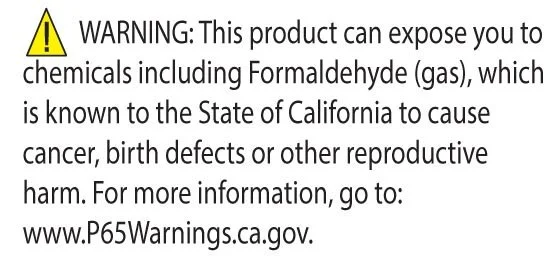
Seeing one on my own couch made me want to check that assumption. It turns out the truth sits in the middle. The over-warning is real, and it has diluted the signal. But the law does require a warning when a listed chemical is present above a specific threshold, and on a polyurethane foam couch, the warning is pointing at something real: foam off-gasses formaldehyde, which is on California's list as a known carcinogen. The label on my couch wasn't regulatory noise. It was accurate.
A Standard Designed to Protect Us
In 1975, California passed a furniture flammability regulation called Technical Bulletin 117, known as TB117. On the surface it seemed reasonable: require furniture foam to withstand a small open flame for twelve seconds. The intention was fire safety. The result was something else entirely.
Because furniture manufacturers didn’t want to produce two separate product lines, one for California and one for the rest of the country, they simply put flame retardant chemicals into everything they made, nationwide. One state standard effectively became the national standard, not through federal legislation, but through the economics of manufacturing. For nearly four decades, flame retardant chemicals were embedded into the polyurethane foam inside virtually every sofa, mattress, and upholstered chair sold in America.
And, here’s the part that should make you angry: it didn’t even work.
Research published in peer-reviewed fire safety journals found that furniture with and without flame retardants burns similarly in a real fire. When a large flame ignites the cover fabric, which happens first in any actual fire scenario, the foam ignites regardless of what chemicals are inside it. The flame retardants weren’t protecting anyone from fires. But they were doing something else entirely.
What Was Happening Inside Our Homes
Flame retardant chemicals don’t stay put. Unlike the acute off-gassing spike of VOCs that occurs in the first 48–72 hours after bringing new furniture home, flame retardants behave differently. They migrate continuously out of foam and into household dust. The very dust that settles on your floors, your coffee table, onto your carpets, and back onto your upholstered furnishings. The dust your children and pets move through every day. The dust you breathe and inadvertently ingest.
Research has linked these chemicals, particularly polybrominated diphenyl ethers (PBDEs) and organophosphate flame retardants, to thyroid disruption, hormonal interference, neurological effects in children, and even cancer. A consensus statement signed by over 200 scientists from 30 countries detailed the health harm and the lack of fire safety benefit. The chemicals were, by every meaningful measure, a failed experiment conducted inside American family rooms for forty years.
The Update and What It Didn’t Fix
In 2013, California updated its standard. TB117-2013 replaced the open flame test with a smolder test for cover fabric, which is a more realistic fire scenario that didn’t require flame retardant chemicals in the foam at all. As of January 2015, new furniture manufacturers were no longer required to spray them onto their products.
This is why when I finally dug into the tag on the RH couch purchased back in 2019, I saw something I didn’t expect: a clear X next to the words “contain NO added flame-retardant chemicals.” The tag even stated, in plain language, that California had identified many flame-retardant chemicals as being known to, or strongly suspected of, adversely impacting human health or development. That acknowledgment, printed on a furniture tag, felt both vindicating and infuriating.
My couch was clear. But the search wasn’t over.
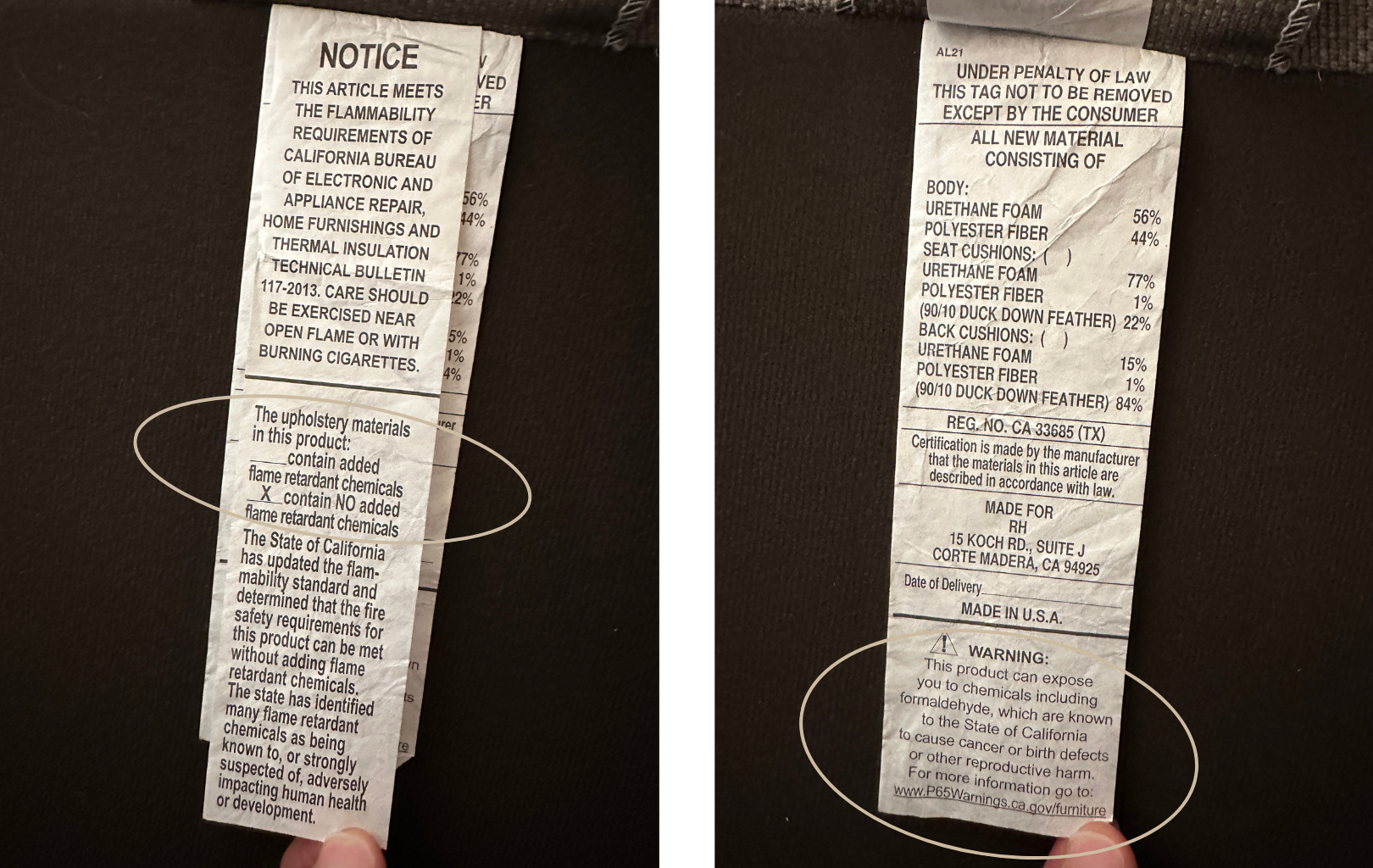
On the left, confirmation that my couch contained NO added flame retardant chemicals. On the right, the Proposition 65 warning.
The Layer Nobody Mentions
The same tag that cleared my couch of flame retardants named the other concern in plain language: this product can expose you to formaldehyde, known to the State of California to cause cancer or birth defects or other reproductive harm.
My seat cushions are 77% urethane foam. Urethane foam off-gasses formaldehyde, most intensely in the first days after purchase, but at measurable levels for up to two years, and potentially longer in poorly ventilated spaces. A separate tag confirmed TSCA Title VI compliance for formaldehyde, meaning the levels meet federal standards. Compliant, however, does not mean absent.
At the time we purchased the RH couch, we also chose 100% down feather back cushions for added comfort, and it turns out that choice quietly favors health too. Down doesn’t require chemical flame-retardant treatment the way polyurethane foam does. Sometimes the right decision finds you before you know to make it.
This is what bioaccumulation looks like in practice. No single exposure is a crisis. And your body keeps a quiet tally — flame retardants in the dust, formaldehyde in the air, synthetic fragrance in the candle, pesticide residue in the food. None of them alarming on their own. All of them adding up over time.
What You Can Do Right Now


You don’t need to replace everything. Start with knowing what you have.
Find the tag on your upholstered furniture. If it was manufactured before 2015, it almost certainly contains flame retardants — and replacing just the foam inserts, not the entire piece, has been shown in peer-reviewed research to significantly reduce flame retardant concentrations in household dust. If it was manufactured after 2015, look for the TB117-2013 compliance tag and the checkbox. The X matters.
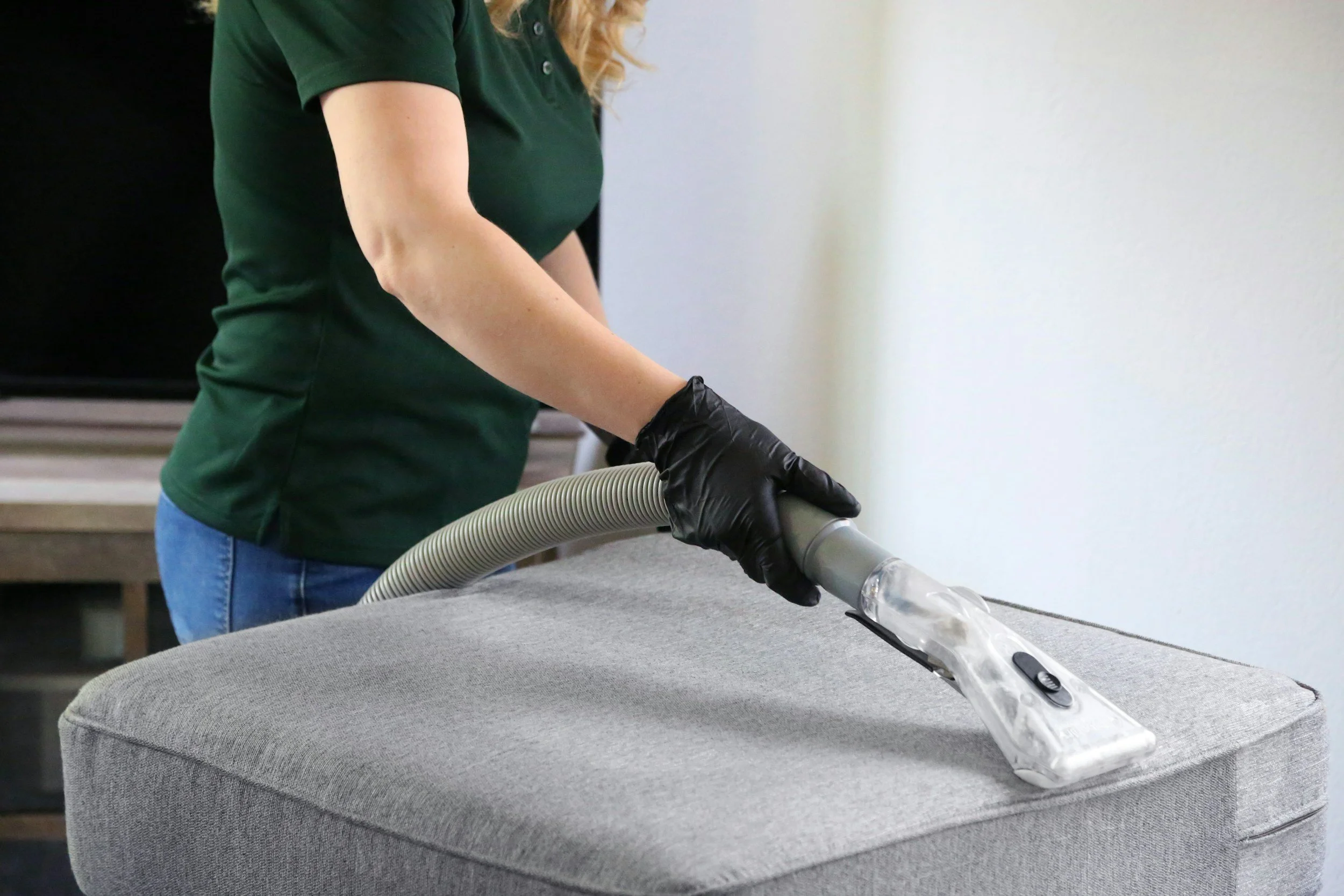
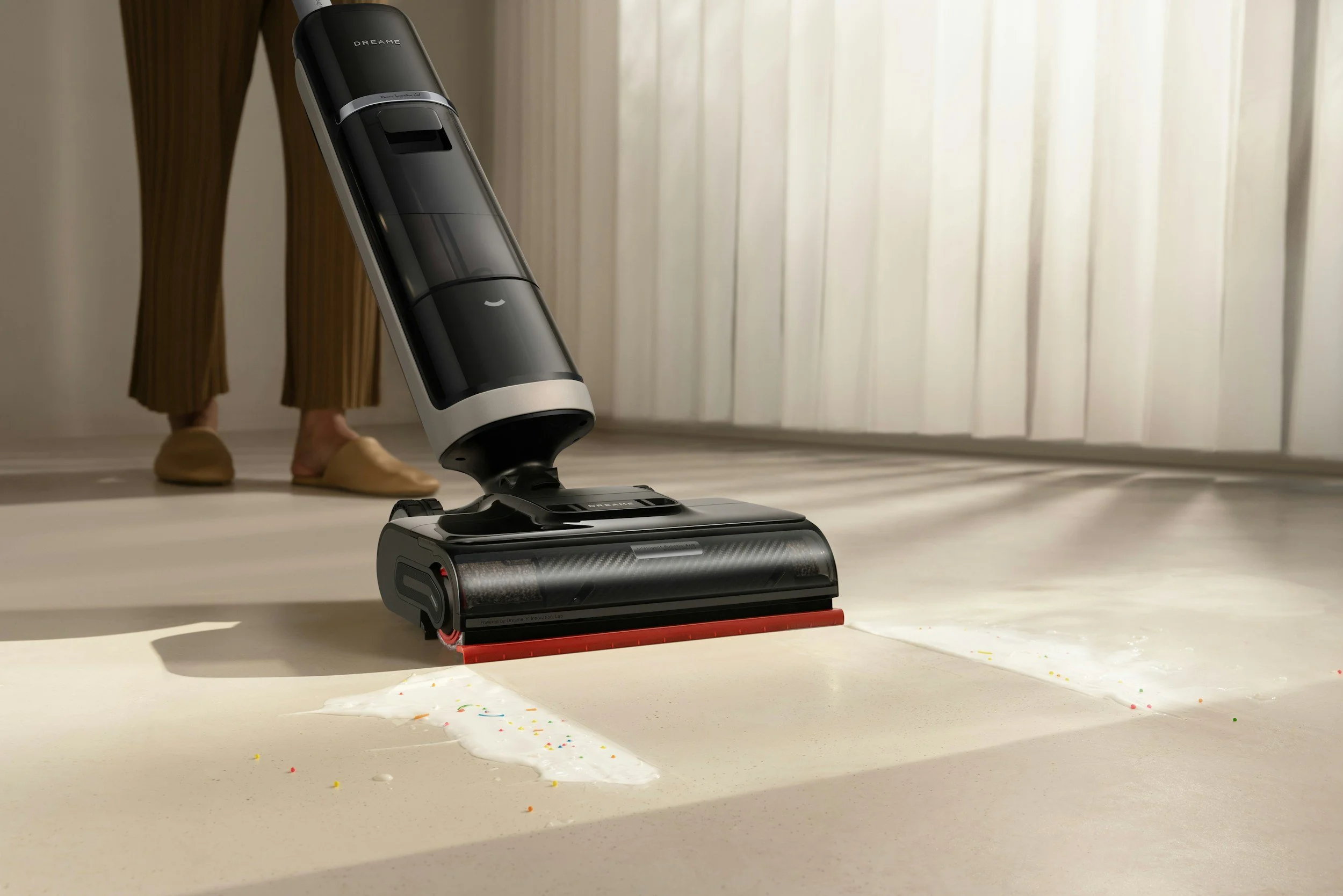
Beyond that, focus on dust control. It's the lowest-effort, highest-leverage move you can make: vacuum frequently with a HEPA filter vacuum, wet mop hard floors rather than dry sweep, open windows daily, and wash hands before eating. These aren't dramatic interventions. They're the kind of small, consistent actions that reduce your body's cumulative load over time. The EPA documents that indoor air is often two to five times more contaminated than outdoor air, and ventilation is one of the simplest ways to shift that.
The Next Question that Came to Mind: The Wool Rugs
I initially chose wool area rugs over synthetics for durability. We have golden retrievers and accidents can happen. Wool is easy to clean. Wool is naturally flame resistant and typically doesn’t require chemical flame-retardant treatment, which is reassuring. But I’m now asking a different question: were they treated with moth repellents or PFAS-based stain-resistant coatings?
That investigation is ongoing. What I've found so far, including the specific questions to ask any rug dealer and what to look for on a tag, is in the Living Spaces section of the Room-by-Room Detox Roadmap.
Want the Full Room-by-Room Breakdown?

The Room-by-Room Detox Roadmap is a free, 25-page guide that walks through practical, manageable swaps one room at a time: bedroom, living spaces, laundry, bathroom, kitchen, and the whole-home foundations that tie them all together. Think of it as the map — a room-by-room framework you can apply to your entire house.
Future Blueprints will go deeper on specific topics like water, EMF mitigation, and the home fasting environment — designed for readers who want the full deep dive on one area at a time. The Roadmap is where you start; the Blueprints are where you go next.